
Nobody gets excited about cable labels. They're invisible when they're done right, they add a little time and cost to an installation, and they're the easiest thing in the world to skip. Which is exactly why they're the first thing a cut-rate installer leaves out — and exactly why their absence quietly costs you money every single time anyone touches the network for the next twenty years. Labeling and documentation are the cheapest insurance in the building. Here's what they actually involve, and why skipping them is a false economy.
What Undocumented Cabling Costs You
The price of a poorly labeled, undocumented system isn't paid at installation. It's paid slowly, over years, in ways that are easy to overlook until they add up:
Every outage lasts longer. When something breaks and the cabling isn't labeled, someone has to trace cables by hand to find the problem — and every minute of that is downtime. A labeled, documented system turns "where does this go?" from an hour of detective work into a few seconds.
Every change is slower and riskier. Moves, adds, and changes are routine over a cabling system's life. Without documentation, each one starts with re-discovering what you have, and the odds of unplugging the wrong thing go up.
Institutional memory walks out the door. Staff leave. IT vendors change. The one person who "knew the network" moves on. Documentation is the memory that survives those departures — without it, every transition means relearning the system from scratch.
None of these costs shows up on the installation invoice. All of them show up later, and cumulatively they dwarf what proper labeling would have cost up front.
What "Properly Documented" Actually Means
There's a recognized standard for this — TIA-606, the administration standard for cabling — and a real installer works to it. In practice, a properly documented system includes several things working together.
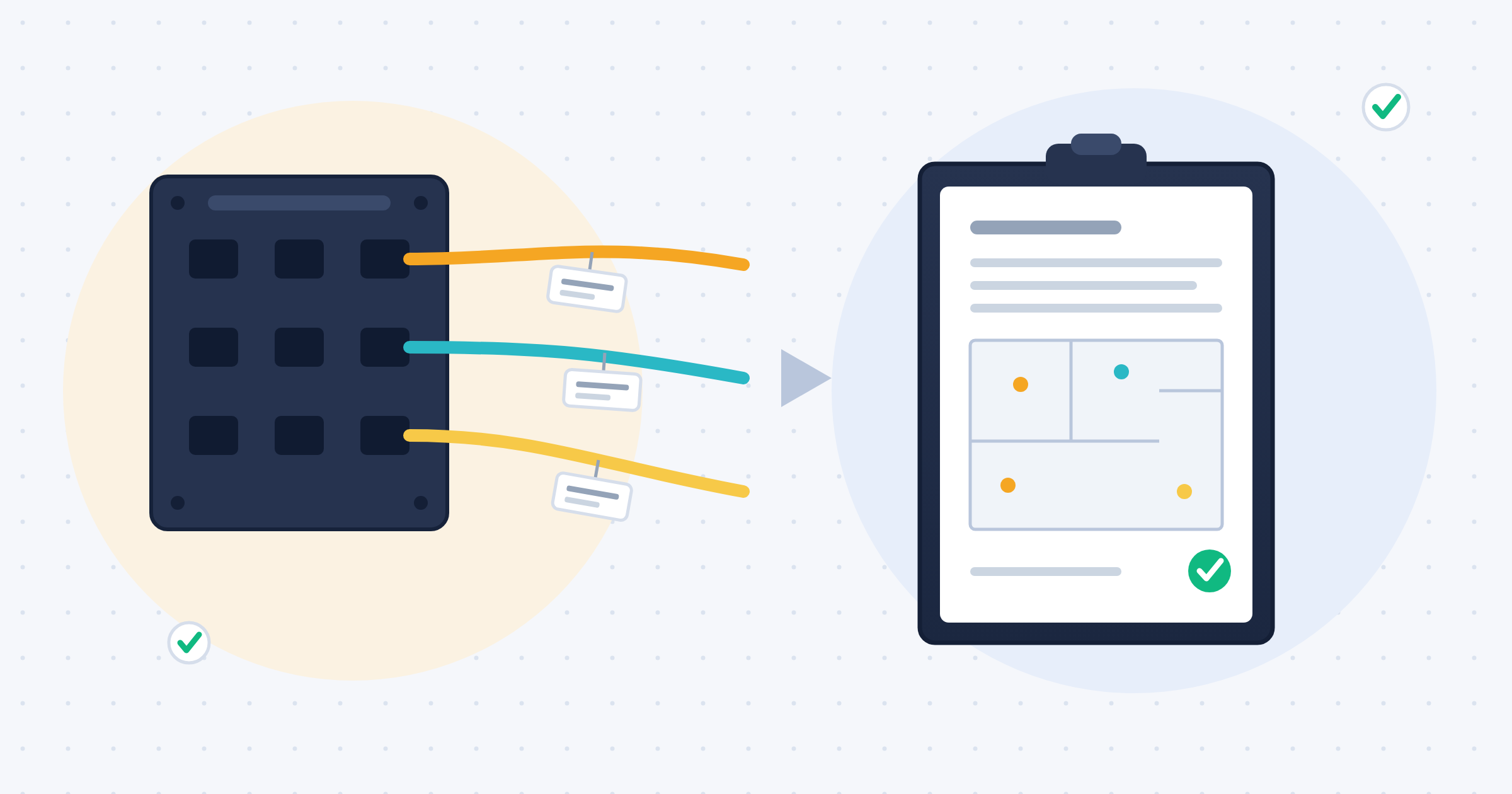
A consistent labeling scheme. Not "the blue cable" or "the one on the left," but a logical, systematic identifier on every cable, jack, patch panel port, and rack — labeled at *both* ends. The scheme encodes location and purpose so that a label tells you what a cable is and where it goes without any guesswork.
Labels that survive. Machine-printed, durable labels — not handwriting on masking tape that fades, smears, and falls off within a year. A label is only useful if it's still legible and attached when you need it a decade later.
Real records. The physical labels point to documentation: patch schedules showing what connects to what, floor plans marking every drop location, cable schedules, and often a cable-management database or at minimum a maintained spreadsheet. This is the map that makes the labeled system navigable.
Color coding. Sensible conventions — distinct colors for data, voice, uplinks, and other purposes — let a technician understand the system at a glance rather than tracing every cable to figure out its role.
Rack elevations. Diagrams of what's mounted where, so the layout of your equipment is documented rather than living only in someone's memory.
The Lifecycle Argument
Here's why this matters more than it seems. Cabling is the longest-lived layer in your network — it stays in the walls for twenty years or more while the equipment plugged into it gets replaced several times over. And across those decades, the system changes constantly: drops get added, connections get moved, equipment gets swapped. Documentation is what keeps that continuously-changing system intelligible over its entire life.
Without it, entropy wins. Every undocumented change makes the next one harder, and an undocumented plant degrades over the years into genuine chaos that nobody fully understands — until eventually the only options are to live with it or rip it out. A documented system, by contrast, stays maintainable because every change is recorded against a known baseline.
The Cost Math Is Not Close
Weigh the two sides honestly. The labor to label and document a system properly during installation is modest — it's a small, one-time addition to a job you're already paying for. The labor wasted over twenty years tracing an undocumented system, extended outage by extended outage and error-prone change by error-prone change, is enormous. And the cost of downtime during a single serious outage — while someone hunts for the right cable in an unlabeled rack — can exceed what documentation would have cost in the first place. It's rarely a close call.
What to Demand From a Bid
Because it's so easy to skip, labeling and documentation are worth making explicit when you're evaluating proposals. Ask whether labeling to the TIA-606 standard is included, ask whether as-built documentation is part of the deliverable — and specifically, ask that the documentation be handed over to you. This last point matters: some installers do the documentation and never actually give it to the customer, which leaves you just as stranded when they're out of the picture. The documentation is yours; make sure you receive it.
How O.B. One Approaches It
We label and document to the TIA-606 standard as a matter of course — every cable identified at both ends, a consistent scheme, durable printed labels, patch schedules and rack elevations, and as-built records delivered to you as part of the job. That documentation is a deliverable you own, not something locked in our files, because the whole point is that your system stays maintainable for its entire life no matter who works on it next. It's the same discipline behind our 100% testing and our lifetime warranty: infrastructure worth installing is infrastructure worth documenting.
The Bottom Line
Labeling and documentation are the least glamorous part of a cabling job and among the most valuable. They cost little at installation and save a great deal over the decades a cabling system lives — faster troubleshooting, cleaner changes, and a plant that stays intelligible as people and equipment come and go. When you're comparing bids, treat their absence as a red flag and their inclusion as exactly what you want. The best time to document a system is while it's being built. The second-best time is before the person who understands it leaves.