
Almost every business has cameras. Far fewer have cameras that do what they're actually needed to do on the day something goes wrong. The gap usually isn't the hardware — it's the design. A camera pointed at the wrong angle, recording at too low a resolution to identify a face, or overwriting the footage you needed two days before you went looking for it, is worse than no camera at all, because it created a false sense of security.
Getting video surveillance right is a design problem before it's a product problem. Here's what actually matters.
IP Cameras and the Shift From Coax
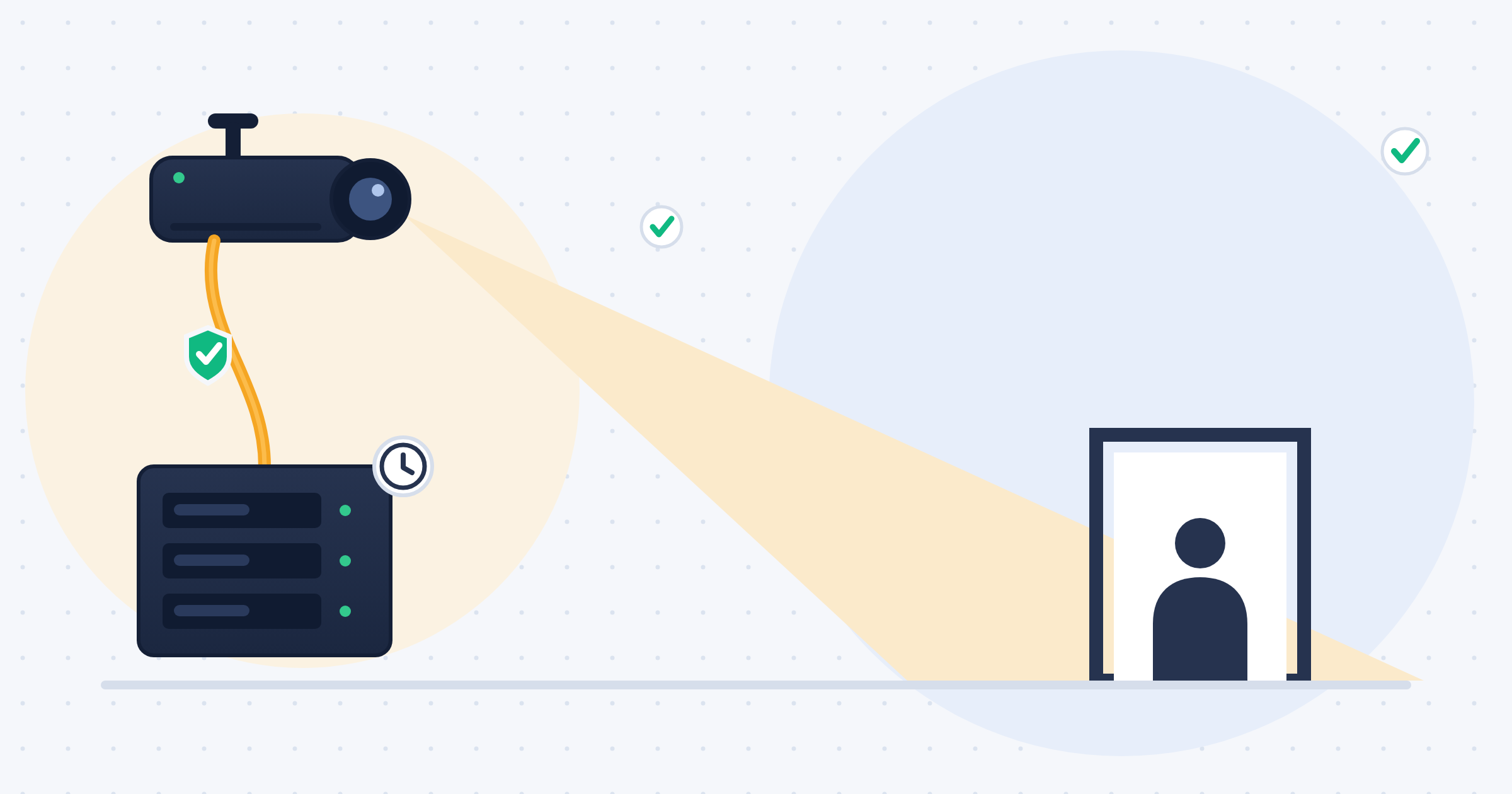
The old world of analog cameras running over coaxial cable to a DVR is fading. Modern systems use IP cameras — network devices that run over the same structured cabling as the rest of your network, powered by PoE, recording to a network video recorder (NVR) or video management software (VMS). The advantages are real: far higher resolution, smarter features, easier expansion, and a single cabling infrastructure. It also means your surveillance system is now part of your network — which, as we'll see, is both a strength and a responsibility.
Resolution Is Not the Whole Story — "Pixels on Target" Is
The instinct is to buy the highest-megapixel cameras available and assume you're covered. But resolution only matters in relation to what you're actually trying to see. The concept that matters is pixels on target — how many pixels land on the thing you care about, whether that's a face, a license plate, or a general scene.
A high-megapixel camera trying to cover a huge area can still deliver too few pixels on a face at the far end to identify anyone. A modest camera tightly framed on a doorway can identify everyone who walks through it. The variables are resolution, lens choice and field of view, and placement — working together. Over-specifying resolution across the board wastes storage and network bandwidth; under-specifying where identification matters means you capture an event you can't use as evidence. Good design matches the camera and the shot to the job each camera is there to do: detection here, identification there.
The Storage Reality Nobody Plans For
This is where many systems quietly fall short. Video storage is a function of four things multiplied together: number of cameras, resolution, frame rate, and how long you retain the footage. Push any of them up and storage requirements climb fast.
Retention is the one people underestimate. Keeping footage for 30 days versus 90 days triples your storage need — and the day you discover an incident that happened five weeks ago, a 30-day retention window means the evidence is simply gone. Retention isn't a technical detail; it's a business decision about how far back you might need to look, and it drives the entire storage design.
Modern compression helps: the H.265 (HEVC) standard roughly halves the bandwidth and storage of the older H.264 for comparable quality, which is why it's worth specifying on a system of any size. But compression doesn't remove the need to plan — it just changes the math. A system designed without a real storage-and-retention plan is a system that will let you down at the exact moment you're counting on it.
Your Cameras Are Now Network Traffic
Because IP cameras stream continuously, a surveillance system of any size puts real, sustained load on your network. A few dozen cameras streaming around the clock is a meaningful and constant demand on switch capacity and PoE power budgets. This is why camera systems shouldn't be an afterthought bolted onto whatever network already exists — they need switches sized for the load, adequate PoE budget to power every camera, and often a dedicated network segment (VLAN) that keeps camera traffic separated from business traffic.
That segmentation isn't only about performance. It's about security.
The Risk Cameras Introduce — and How to Contain It
Here's the uncomfortable truth about IP cameras: they are internet-capable computers, and historically they've been one of the most exploited devices on business networks. Cameras left on default passwords have been hijacked en masse into botnets and used as a foothold to reach deeper into networks. The device watching your front door can, if neglected, become the way an attacker gets in.
Containing that risk is straightforward but essential: change default credentials, keep camera firmware updated, and segment cameras onto their own network so that even if one is compromised, it can't be used to roam the rest of your systems. A surveillance system designed with security in mind protects you without becoming a new vulnerability. One installed carelessly does the opposite.
Lighting, Low Light, and the Software That Makes Footage Usable
Two more things separate useful systems from disappointing ones. First, lighting: a camera is only as good as the light it has to work with. Low-light performance, infrared illumination for darkness, and wide dynamic range (WDR) for high-contrast scenes like a bright doorway against a dark interior all determine whether you get a usable image or a silhouette. Second, the video management software and its analytics: motion detection, line-crossing alerts, object detection, and license plate recognition turn a wall of recorded footage into something searchable. When an incident happens, the difference between smart search and scrubbing through hours of video by hand is enormous.
How O.B. One Designs a Surveillance System
We design coverage around what each camera actually needs to accomplish — enough pixels on target to identify when identification matters, the right lens and placement for the shot, not just a high number on a spec sheet. We plan storage and retention around how far back you may realistically need to look, size the network and PoE to carry the continuous load, and segment the cameras to protect the rest of your systems. Because we build the structured cabling and PoE infrastructure underneath, it all comes together as one designed, tested, and documented system — backed by our 100% lifetime warranty.
The Bottom Line
A surveillance system earns its keep on one day: the day you need the footage. Everything about good design points at that moment — the right shot with enough detail to matter, footage retained long enough to still be there, a network that carries the load, and cameras secured so they protect you instead of exposing you. Cameras on the wall are easy. Cameras that deliver when it counts take design. Make sure yours were built for the day you hope never comes.